Continue Reading Our Latest Articles
Written by our expert practitioners in Yoga, Ayurveda and Mindfulness, these articles will give you greater insight into the lifestyle practices and tools we teach for happiness and wellbeing.
Modern fitness programs often combine different forms of exercise to achieve better health and physical performance.
Whilst weight lifting focuses on building strength and cardio exercises improve endurance and heart health, yoga can offer a complementary approach that enhances flexibility, recovery, and mental focus.

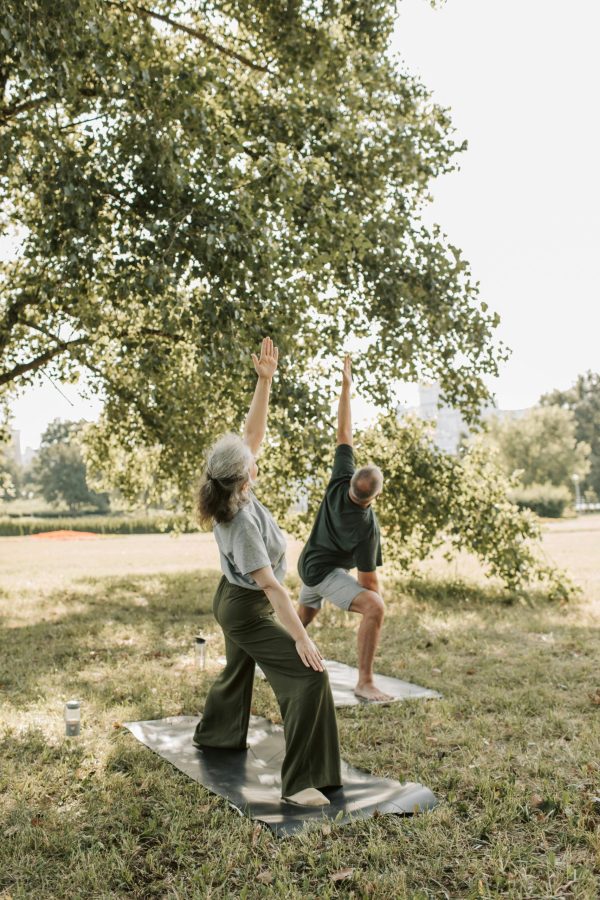
One of the most significant contributions of yoga to fitness is improving flexibility and mobility. Regular yoga practice involves stretching and lengthening the muscles, which helps maintain a full range of motion in the joints. This range is defined by the freedom our joints have to move in their own space. Having a limited range of motion is what people would normally refer to when saying they “feel tight or stuck” in movements.
Yoga also helps with muscle strength by utilising bodyweight exercises and repetitions, in a similar way to calisthenics. Another interesting point of most yoga practices is that they utilise many compound movements, which demand different parts of the body to work synergistically. This can develop the body in a different way than sports that tend to isolate muscles and body groups, such as weight lifting. Also, it is the nature of many sports to overemphasise certain patterns of movement and body parts, for example the legs in running or swinging arms in tennis, which can leave other parts of the body deprived of proper stimulation. Yoga can aid in that by being an activity with a broad spectrum of possibilities, in theory capable of providing movement to nearly all parts of the body.
Another important benefit of yoga is enhancing recovery. Gentle yoga postures and breathing techniques can have positive effects on cardiovascular health and the nervous system
by stimulating the parasympathetic nervous system—the one responsible for rest, calm, and recovery. While many sports emphasise stimulation and development, yoga can counteract this by teaching how to settle the body in a more peaceful fashion.
Yoga also contributes to better breathing. Many yoga practices include controlled breathing techniques that train the lungs to work more effectively. Improved breathing capacity can benefit cardio activities by increasing oxygen supply to the body and tolerance to metabolic stress. This helps athletes maintain endurance and sustain physical effort for longer periods. Breathing is also well known for its connection to the nervous system and mental states, so it functions as a gateway for interventions in our stress levels and feelings of mental clarity and calmness.
Calm focus and body awareness are other possible benefits. Yoga trains the mind to stay present and aware of the body (proprioception), internal body states (interoception), breathing, and mental states. This mindfulness helps individuals perform exercises more safely and efficiently, exerting less energy, with added benefits for mental health. Also, as a physical activity, yoga might be unique in that it emphasises mental training and emotional regulation so strongly, serving as a pathway towards meditation practice.
Written by our expert practitioners in Yoga, Ayurveda and Mindfulness, these articles will give you greater insight into the lifestyle practices and tools we teach for happiness and wellbeing.